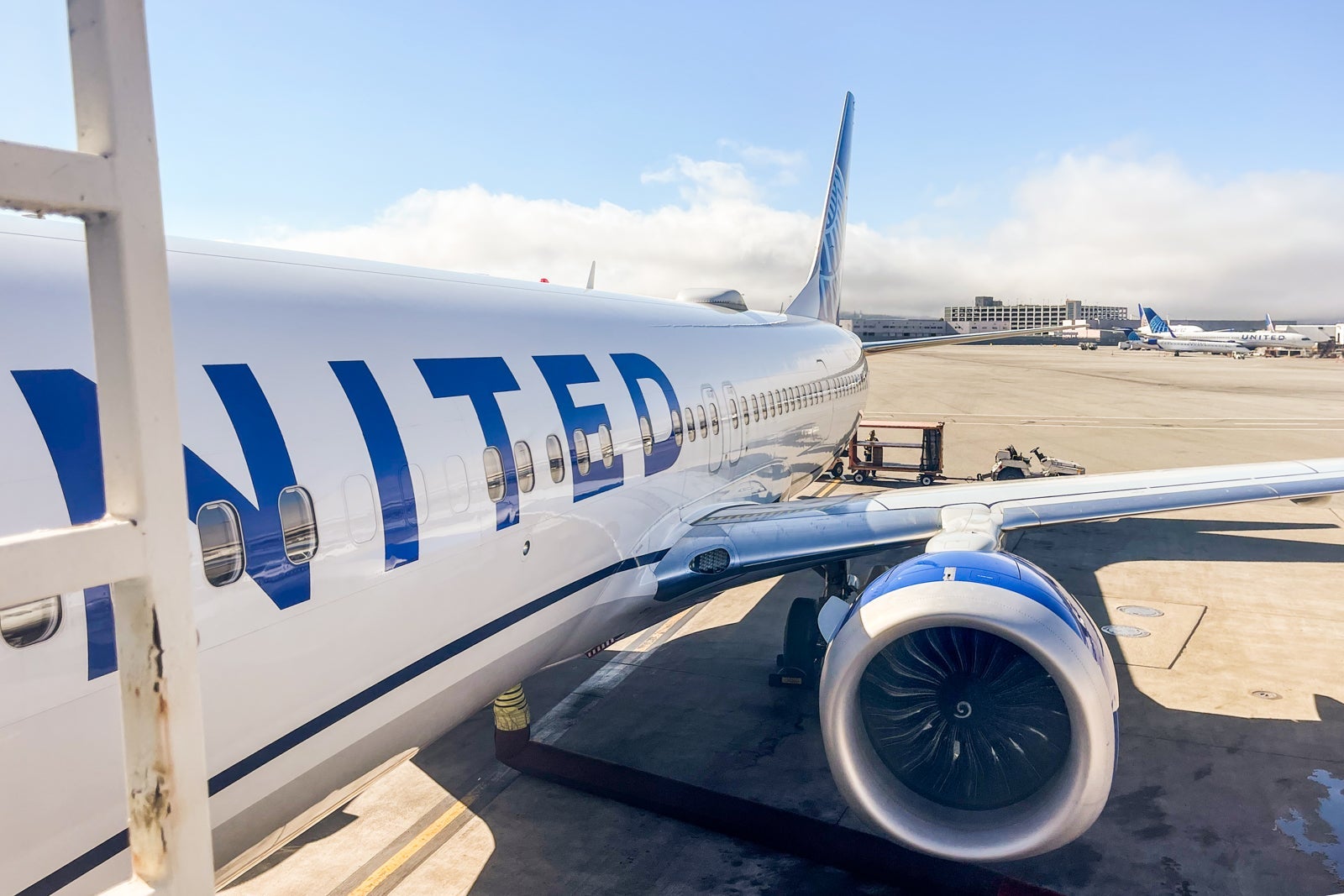
In a significant development for regional air travel, United Airlines has announced the restoration of crucial nonstop service from Cleveland to both Las Vegas and Miami later this year. This strategic move marks United’s most ambitious schedule at the Ohio airport in a decade, signaling a renewed focus on a market that once served as a vital operational hub for the carrier. The addition of these popular leisure and business destinations promises enhanced connectivity and a substantial boost to Cleveland’s travel infrastructure.
For years, Cleveland served as a major United Airlines hub, a legacy inherited from its merger with Continental Airlines. The subsequent de-hubbing of Cleveland in 2014 was a blow to the region’s air connectivity and economic aspirations. This latest announcement, therefore, represents more than just new routes; it symbolizes a re-engagement by United with a historically important market, offering a glimpse into evolving airline network strategies and a responsive approach to burgeoning passenger demand.
Strategic Re-engagement with a Key Market
The decision to expand service in Cleveland is not arbitrary. It reflects a careful analysis of current travel trends and market dynamics. Post-pandemic, leisure travel has rebounded with remarkable vigor, often outpacing business travel in recovery. Destinations like Las Vegas and Miami are prime beneficiaries of this trend, attracting millions of tourists annually for their unique blend of entertainment, nightlife, cultural attractions, and natural beauty. United’s move positions the airline to capitalize directly on this sustained demand from the Cleveland metropolitan area.
Furthermore, the economic impact of restored and expanded air service cannot be overstated for Cleveland. Improved air links facilitate business travel, encourage tourism, and attract investment, all of which contribute to regional growth and job creation. By offering direct flights, United enhances Cleveland’s attractiveness as a business location and a tourist origin point, reducing travel friction and saving valuable time for passengers. This expansion underscores a broader industry trend of airlines fine-tuning their networks to serve high-demand point-to-point markets more effectively, even as the traditional hub-and-spoke model remains foundational.
The Allure of New Destinations
The choice of Las Vegas and Miami as target destinations is particularly insightful. Las Vegas, the “Entertainment Capital of the World,” offers an unparalleled array of resorts, casinos, world-class dining, and convention facilities. It is a magnet for both individual leisure travelers and large corporate groups, making it a perennially popular route. The demand for seamless travel to this vibrant city from Ohio has historically been strong, and United is now poised to meet that need head-on.
Similarly, Miami stands as a premier global gateway, famed for its stunning beaches, vibrant multicultural scene, and status as a crucial port for cruises. It serves as a significant link to Latin America and the Caribbean, making it attractive not only to sun-seekers but also to travelers connecting internationally or embarking on sea voyages. The re-establishment of nonstop service to Miami provides Cleveland residents with direct access to these diverse opportunities, strengthening both leisure and business ties to South Florida.
A Humorous Detour: The Unpredictability of Travel
Speaking of travel, one quickly learns that even the most meticulously planned itineraries can sometimes unravel in the most delightfully unexpected ways. I recall a particular journey, years ago, when I was heading to what I thought would be a relaxing beach getaway. My flight, while initially on schedule, began its descent into chaos the moment we encountered unexpected turbulence, followed by an announcement that we were diverting due to “unforeseen operational issues” at our destination airport. We landed in a small, provincial city several hundred miles away from where I intended to be, with no clear timeline for onward travel. The gate agent, bless her heart, tried her best to rebook everyone, but the sheer volume of frustrated passengers meant the queue stretched for what felt like an eternity. To pass the time, a fellow stranded traveler, a gentleman with a booming laugh and an equally booming collection of dad jokes, started a spontaneous karaoke session using his phone, serenading us all with questionable renditions of classic rock anthems right there in the boarding area. It was utterly absurd, completely unprofessional, and strangely, quite uplifting.
The airline eventually managed to get us on another flight the next morning, but not before issuing hotel vouchers. My voucher led me to a motel that could generously be described as “retro chic,” complete with a rotary phone and a television set that predated color. The breakfast spread consisted of coffee so strong it could fuel a rocket and pastries that seemed to have been carved from concrete. While far from the luxurious resort I’d envisioned, that unexpected overnight stay and the impromptu karaoke concert transformed what could have been a deeply frustrating experience into a memorable anecdote. It reminded me that sometimes, the best parts of travel aren’t in the meticulously planned moments, but in the chaotic, humorous detours that forge unexpected connections and provide a good story for years to come – though I still have a soft spot for smooth, direct flights like the ones United is now offering!
Future Outlook and Industry Implications
This expansion by United Airlines at Cleveland is indicative of a broader industry trend where airlines are increasingly agile in adapting their network strategy to meet evolving market demands. While hub operations remain critical, there’s a growing recognition of the value in connecting strong origin and destination markets directly, especially for leisure-focused routes. This not only enhances passenger convenience but also allows airlines to optimize their fleet utilization and capture new revenue streams.
For Cleveland, this move represents a significant step forward in reclaiming its stature as a well-connected metropolitan area. It provides residents with more choices, reduces the need for connecting flights through distant hubs, and reaffirms United’s commitment to serving a valuable segment of the American Midwest. As the airline industry continues its robust recovery, such targeted expansions will be key to fostering regional growth and delivering enhanced value to travelers.