
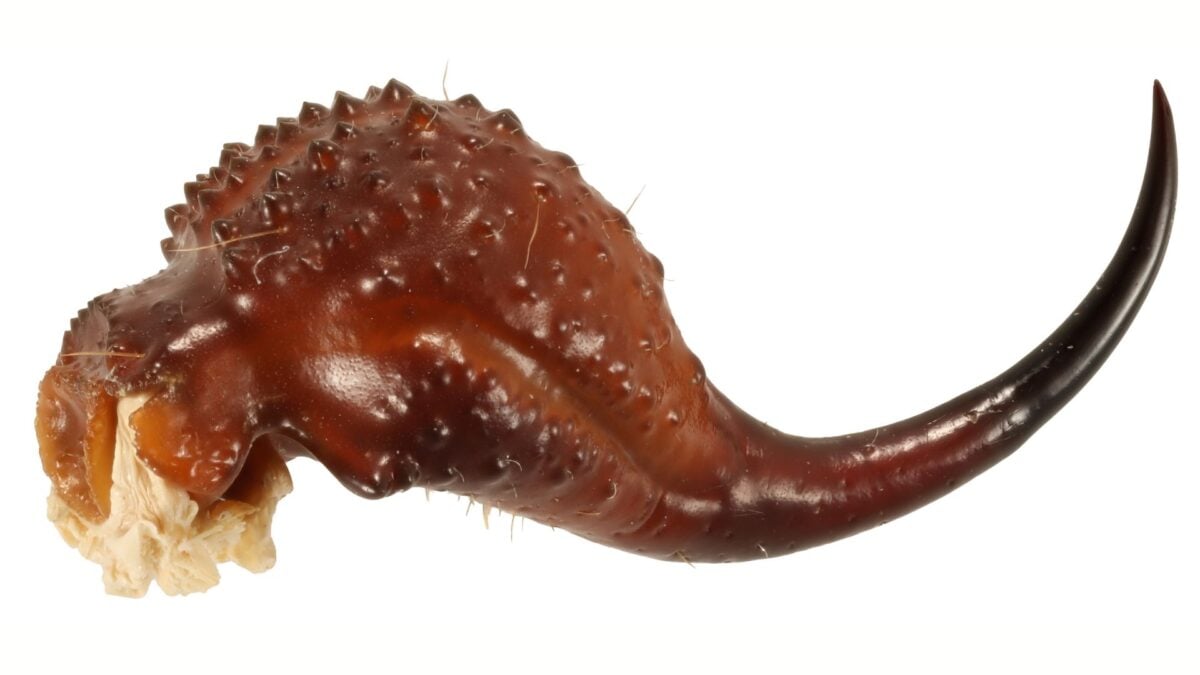
In the vast tapestry of life, certain creatures captivate our imagination not merely through their appearance or behavior, but through the sheer ingenuity embedded within their very biology. Among these enigmatic beings, the scorpion stands as a chilling silhouette against the desert moon, a predator whose ancient lineage whispers tales of primal power. Long admired and feared for their formidable defenses and potent venom, new research now elevates these eight-legged warriors to an even more astonishing status: scorpions, it turns out, are quite literally creatures of metal.
A recent groundbreaking study has unveiled a fascinating truth: numerous species of scorpions meticulously integrate zinc and a host of other heavy metals directly into the architecture of their most potent weapons—their pincers and their infamous stingers. This revelation shatters conventional perceptions, casting scorpions not just as mere arachnids, but as living forges, silently crafting their instruments of survival from the very elements of the earth. Their tools are not just chitinous extensions; they are miniature, biological swords and shields, hardened with an alchemical touch that has been honed over eons of evolution.
The Crystalline Edge of Survival
The implications of this discovery are as sharp and profound as a scorpion’s stinger itself. The presence of zinc, a metal renowned for its strength and rigidity, endows these predatory appendages with an extraordinary level of hardness and durability. Imagine the scorpion’s pincer not just as a pair of grasping claws, but as a living vise, reinforced with an inner skeletal framework of metal, capable of delivering crushing force with unwavering integrity. Their stingers, often compared to hypodermic needles, now take on the persona of microscopic, metal-tipped lances, piercing through the toughest exoskeletons with an ease that belies their size. This metallic infusion provides a crucial evolutionary advantage, transforming soft biological tissues into formidable implements that resist wear and tear, maintaining their razor-sharp efficiency through countless hunts and defensive skirmishes.
This biological innovation speaks volumes about the relentless pressures of natural selection. In a world where survival hinges on the effectiveness of one’s tools, scorpions have developed a sophisticated form of biomineralization, akin to a blacksmith’s meticulous work, but orchestrated at a cellular level. Their weapons are not merely coated; the metals are seamlessly integrated, becoming an intrinsic part of the chitinous structure. This makes their pincers behave like microscopic, hardened steel jaws, snapping shut with the precision of a finely tuned machine, while their stingers become formidable, needle-like probes, delivering venom with surgical precision. The tenacity these metals impart is essential for the relentless demands of their environment, allowing them to subdue struggling prey or fend off larger predators with an unyielding grip and a piercing strike.
Beyond the simple act of strengthening, these heavy metals likely contribute to the overall efficiency of the scorpion’s attack. A harder pincer means less energy expended to crush prey, ensuring a quicker, more decisive incapacitation. A stiffer stinger reduces the risk of bending or breaking during a high-impact strike, guaranteeing venom delivery when it matters most. It’s a testament to nature’s engineering prowess, where every atom serves a purpose in the grand design of survival.
Nature’s Engineers and Future Inspirations
The revelation that scorpions are veritable living smelters, incorporating zinc and other elemental components into their anatomy, opens up exciting avenues for scientific exploration. This phenomenon of biomineralization, where living organisms produce minerals to harden or stiffen existing tissues, is a field of intense study. From the nacre of abalone shells to the enamel of human teeth, nature continually demonstrates ingenious methods of creating highly resilient materials. Scorpions now stand as compelling case studies in this intricate dance between biology and inorganic chemistry, potentially offering blueprints for human innovation.
Imagine the possibilities for biomimetics – the science of designing materials and systems that are inspired by nature. Could the scorpion’s metallic pincers and stingers provide insights for developing new classes of super-hard, lightweight materials for engineering, aerospace, or even medical applications? The precision with which these arachnids integrate metals at a nanoscale could unlock secrets to creating ceramics or composites with unprecedented strength and durability, materials that could withstand extreme stresses far beyond our current capabilities. The study not only elevates the perceived “coolness” of scorpions but positions them as unwitting mentors in the ongoing quest for advanced material science.
In essence, the scorpion, already a creature shrouded in mystique and an undeniable symbol of raw wilderness, has been recontextualized by science. It is not just a hunter of the night, but a living testament to nature’s boundless capacity for innovation, a tiny artisan sculpting its destiny with the very building blocks of the earth. These creatures, once seen as fearsome biological entities, are now understood as sophisticated biochemical marvels, their very essence imbued with the unyielding strength of metal. The desert’s silent guardian, the scorpion, continues to reveal layers of complexity, proving that the most ancient and fearsome creatures often hold the most compelling secrets to life’s extraordinary adaptations.