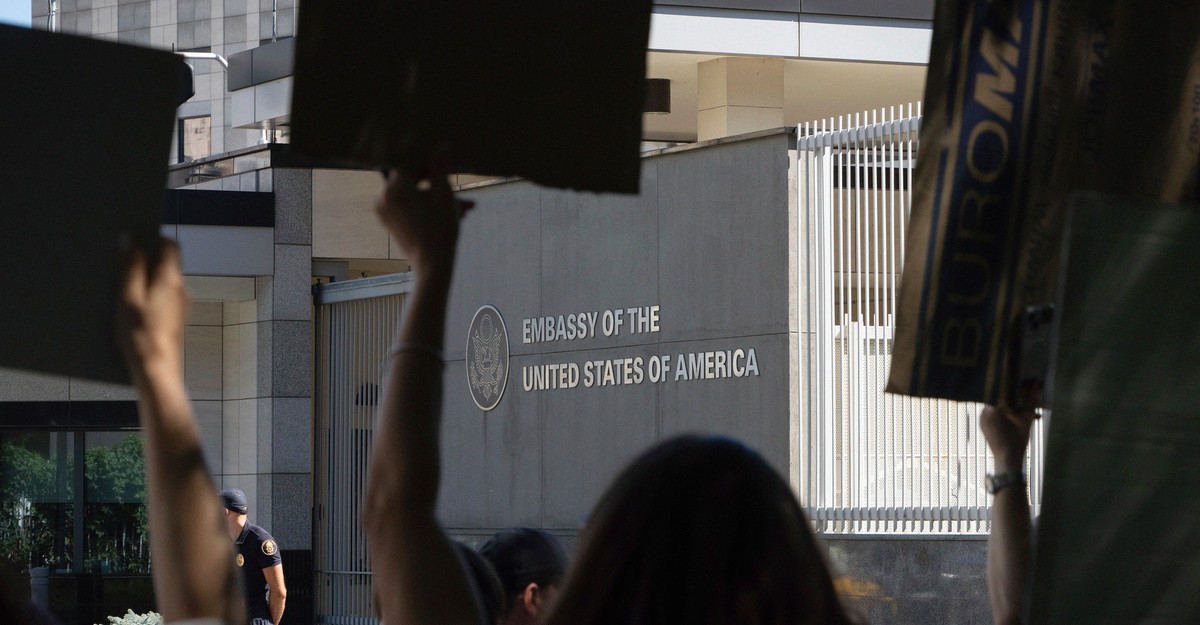
The global stage is a complex tapestry of relationships, rivalries, and shared challenges, where the absence of key players can reverberate with significant consequences. At present, an unsettling reality casts a long shadow over American foreign policy: more than 100 of the country’s ambassadorships remain unfilled. This glaring void is not merely a bureaucratic oversight; it is a profound signal, indicative of a fundamental shift in the administration’s perceived value of diplomacy as a cornerstone of national power. In an era where the United States finds itself engaged, in various capacities, with almost every major global actor, the deliberate neglect of its primary diplomatic instruments presents an unparalleled risk to its interests and influence.
The Indispensable Role of Diplomacy and Its Current Erosion
Ambassadors are far more than ceremonial figures. They are the frontline operatives of statecraft, the eyes and ears of a nation abroad, tasked with fostering relationships, negotiating intricate agreements, and interpreting the nuanced realities of foreign capitals. They serve as direct conduits for communication, often preventing minor disputes from escalating into major confrontations. A well-placed ambassador can de-escalate tensions, facilitate critical intelligence gathering, and champion American economic and strategic interests in ways that military might alone cannot achieve. They are the embodiments of soft power, cultivating goodwill and understanding, which are invaluable assets in a multipolar world.
The current landscape, characterized by numerous vacancies, suggests a diminished appreciation for these vital functions. Each unfilled post represents a silent room in a critical conversation, a missed opportunity for dialogue, and a weakened link in America’s global network. Without experienced, Senate-confirmed ambassadors at the helm, embassies often operate with reduced authority and insight, relying on career diplomats who, while invaluable, may lack the direct presidential mandate and political leverage necessary for high-stakes negotiations. This creates a vacuum, making the United States less agile, less informed, and ultimately, less effective in navigating an increasingly volatile international environment.
Geopolitical Implications: A World Without Our Voice
The consequences of this diplomatic deficit are particularly acute given the current state of global affairs. As noted, the United States is embroiled in what has been described as a “hot war” with Iran and a “cold war” with major powers like China and Russia. These are not situations that benefit from a lack of communication or understanding; quite the opposite. Each requires sophisticated, consistent engagement, clear messaging, and a deep understanding of opposing viewpoints.
In the context of Iran, the absence of an ambassador means a critical lack of direct, high-level diplomatic channels to de-escalate tensions, negotiate prisoner releases, or even gauge the true intentions of the Iranian leadership. It forces communication through third parties, which inherently introduces layers of interpretation and potential miscalculation. Without a permanent representative, the U.S. forfeits a crucial vantage point for understanding internal dynamics and external strategies, leaving it more reliant on less direct, and often less reliable, sources of information.
The strategic competition with China and Russia likewise demands a robust diplomatic presence. These relationships are defined by intricate geopolitical maneuvering, economic rivalry, and cybersecurity challenges. An ambassador to China, for instance, is pivotal in managing trade disputes, addressing human rights concerns, and coordinating responses to regional security issues. Similarly, an ambassador to Russia is essential for navigating arms control agreements, addressing cyber threats, and managing proxy conflicts. The absence of these key figures weakens America’s ability to project influence, respond effectively to provocations, and articulate its stance in these critical relationships, making the path toward mutual understanding or even managed disagreement significantly more perilous.
A Personal Reflection on the Power of Communication
While the stakes of international diplomacy are monumentally high, the fundamental importance of clear communication and cultural understanding can be illuminated even in the most trivial personal experiences. I recall a particularly amusing incident during a solo backpacking trip through a remote region of Vietnam years ago. Eager to try a local delicacy I’d heard about – a specific type of freshwater snail dish – I ventured into a bustling market. My grasp of Vietnamese was rudimentary, to say the least, consisting mostly of “hello,” “thank you,” and pointing vigorously.
After several minutes of charades and increasingly elaborate hand gestures involving imaginary snails and slurping sounds, punctuated by the vendor’s equally bewildered yet good-natured responses, I was confident I had conveyed my culinary desire. Imagine my surprise when, instead of the anticipated bowl of savory snails, I was presented with a meticulously prepared plate of fresh fruit, artfully arranged and accompanied by a small bowl of chili salt. It seemed my “snail” gestures had been interpreted as a request for something fresh and exotic, perhaps a “starfruit” or a “dragon fruit” – a complete, yet harmless, cultural and linguistic misfire that left us both laughing.
While my culinary misadventures were utterly trivial in the grand scheme of things, they served as a vivid, albeit amusing, reminder of the profound complexities inherent in cross-cultural communication. The subtle nuances of language, the unspoken cues, and the underlying cultural assumptions can lead to wildly different interpretations, even with the best intentions. In my case, the worst outcome was an unexpected, but delicious, snack. On the global stage, however, where misunderstandings can lead to economic sanctions, political isolation, or even armed conflict, the necessity of skilled communicators – the professional diplomats who spend lifetimes mastering these nuances – is not merely beneficial; it is absolutely critical.
The Path Forward: Reaffirming Diplomacy’s Value
The current administration’s approach signals a troubling shift, suggesting that direct engagement, negotiation, and relationship-building are perhaps less valued than unilateral action or direct confrontation. This perspective, however, fundamentally misunderstands the comprehensive toolkit required for effective global leadership. The United States cannot afford to fight with “almost everyone” without its primary diplomatic instruments finely tuned and expertly wielded.
The re-establishment of a full complement of ambassadors is not merely a procedural step; it is a vital reaffirmation of America’s commitment to principled engagement, strategic stability, and peaceful resolution. It sends a powerful message to allies that their concerns are heard and to adversaries that channels of communication remain open. Robust diplomacy is not a sign of weakness; it is a demonstration of strength, foresight, and a profound understanding that national security is intrinsically linked to a nation’s capacity to communicate, negotiate, and build consensus in a world that demands constant, nuanced engagement.