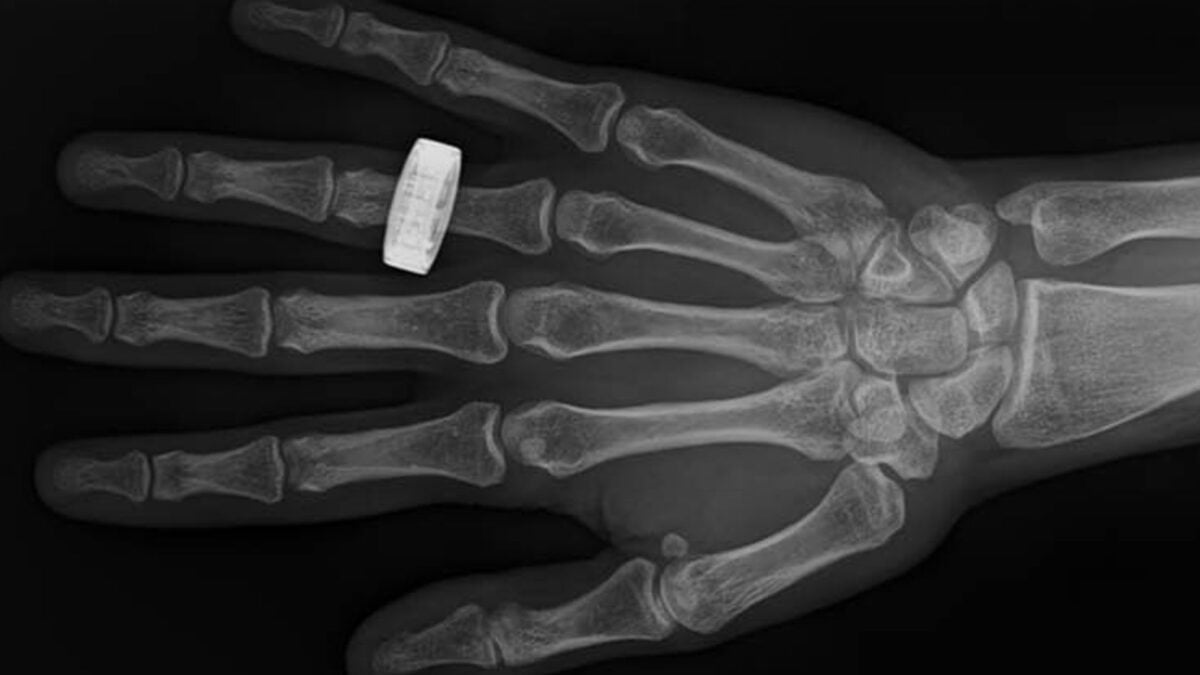
The landscape of space exploration has been irrevocably altered with the recent announcement: the first medical X-rays ever taken in space. This monumental achievement, realized during SpaceX’s Fram2 mission launched in late March 2025, represents a pivotal moment for astronaut health and the ambitious endeavor to push humanity farther into the cosmos. While the Fram2 mission is celebrated for sending four amateur astronauts into an unprecedented polar orbit, its most profound legacy might well be the groundbreaking advancement in autonomous space medicine.
The ability to conduct diagnostic imaging in microgravity signals the true beginning of a new era. For decades, medical care in space has been largely reactive and limited, relying heavily on pre-flight health screenings, ground-based consultation, and an extensive pharmacy of medications. Serious injuries or conditions often necessitated emergency returns to Earth, a luxury that will become increasingly impractical, if not impossible, as humans journey to the Moon, Mars, and beyond. This milestone is not merely a technological demonstration; it is a foundational step towards establishing true medical self-sufficiency for deep-space missions.
The Imperative for Onboard Diagnostics
The space environment imposes unique physiological stresses on the human body. Prolonged exposure to microgravity leads to well-documented issues such as bone density loss and muscle atrophy. While these are typically monitored through biochemical markers and exercise regimens, acute injuries, such as fractures, dislocations, or the presence of foreign bodies, require immediate and precise diagnosis. Consider scenarios where an astronaut experiences a fall during an EVA, develops a kidney stone, or suffers a dental abscess. Without immediate diagnostic capabilities like X-rays, medical decisions would be based on limited information, potentially leading to delayed treatment, increased pain, and mission compromise.
Furthermore, conditions that are manageable on Earth can escalate rapidly in the confined, high-stress environment of a spacecraft. The ability to visualize internal structures allows for crucial differentiation between minor ailments and severe medical emergencies. For instance, diagnosing a kidney stone versus muscle strain, or identifying a hairline fracture before it becomes a complete break, can critically impact an astronaut’s prognosis and the overall success of a mission. The introduction of X-ray technology addresses a significant gap in the in-situ medical toolkit, offering a layer of diagnostic confidence previously unavailable.
Technological Marvel: Miniaturization and Safety
Bringing X-ray capabilities into space was no small feat. Traditional X-ray machines are bulky, heavy, and require substantial power – all anathema to spaceflight. The successful deployment on Fram2 implies significant breakthroughs in miniaturization and power efficiency. Modern advancements in digital radiography, coupled with sophisticated shielding and low-dose imaging techniques, have made this possible. The X-ray system deployed likely utilizes flat-panel detectors and advanced image processing algorithms to produce high-quality diagnostic images with minimal radiation exposure to both the patient and surrounding crew.
The design must also account for the unique challenges of the space environment, including microgravity operations, radiation hardening of electronics, and robust construction to withstand launch vibrations. The development emphasizes a commitment to astronaut safety, ensuring that the diagnostic benefit outweighs any potential risks associated with the device itself. This portable, low-dose technology represents a significant engineering triumph, paving the way for even more advanced medical devices to be integrated into future spacecraft and habitats.
The SpaceX Fram2 Mission: Beyond Orbit
The Fram2 mission itself deserves recognition beyond its medical achievement. Sending four amateur astronauts into a polar orbit marks a historic first. Unlike conventional equatorial or inclined orbits, a polar orbit provides unique perspectives of Earth, allowing for comprehensive monitoring of the planet’s entire surface as it rotates beneath the spacecraft. This orbit is particularly valuable for Earth observation, climate science, and reconnaissance. However, it also presents distinct challenges, particularly concerning radiation exposure, as spacecraft in polar orbits frequently pass through regions with higher radiation levels, such as the Van Allen belts.
The fact that this medical breakthrough occurred on a mission involving private citizens, rather than solely government-trained astronauts, underscores the accelerating democratization of space access. As more individuals venture beyond Earth, the need for robust, accessible, and comprehensive medical support systems becomes paramount. The Fram2 mission, by demonstrating vital medical capabilities with a civilian crew in a novel orbital environment, further validates the crucial role of private enterprise in pushing the boundaries of human spaceflight and its supporting technologies.
Implications for Deep Space Exploration
The significance of onboard X-ray capabilities truly blossoms when considering future deep-space missions to the Moon and Mars. These journeys will involve months or even years away from Earth, with communication delays stretching to minutes or tens of minutes. The possibility of returning to Earth for medical emergencies will be non-existent. In such scenarios, the crew must be largely self-sufficient, equipped with the tools and training to diagnose and manage a wide range of medical conditions.
X-rays are but one piece of this complex puzzle, yet a critically important one. They lay the groundwork for a future where sophisticated medical clinics, complete with surgical capabilities, advanced imaging, and laboratory diagnostics, are integral components of long-duration spacecraft and planetary habitats. This advancement brings us closer to a future where humans can truly live and work safely in environments far removed from terrestrial medical infrastructure. It promotes medical autonomy for explorers, giving them the best possible chance to overcome unforeseen health challenges independently.
Future Outlook and Recommendations
While the first space X-ray is a monumental step, it is merely the beginning. Future development must focus on several key areas:
- Further Miniaturization and Automation: Reducing size, weight, and power requirements even further.
- Integration with Telemedicine Systems: Seamless data transfer to ground-based medical teams for expert consultation.
- Enhanced Diagnostic Modalities: Expanding beyond X-rays to include ultrasound, MRI, and other vital imaging techniques.
- Crew Training: Developing comprehensive training programs for astronauts to operate these advanced medical devices effectively.
- Radiation Protection: Continued research into minimizing radiation doses from both the environment and medical procedures.
The benefits of this space-faring medical technology extend beyond the confines of a spacecraft. Innovations in miniaturized, low-dose, and portable X-ray systems developed for space have direct applications in remote terrestrial environments, disaster zones, and underserved communities on Earth. This synergistic relationship between space exploration and terrestrial healthcare underscores the profound and far-reaching impact of humanity’s ambitious journey to the stars. The first medical X-rays in space are a powerful testament to human ingenuity and our unwavering commitment to safeguarding life, wherever it may venture.