
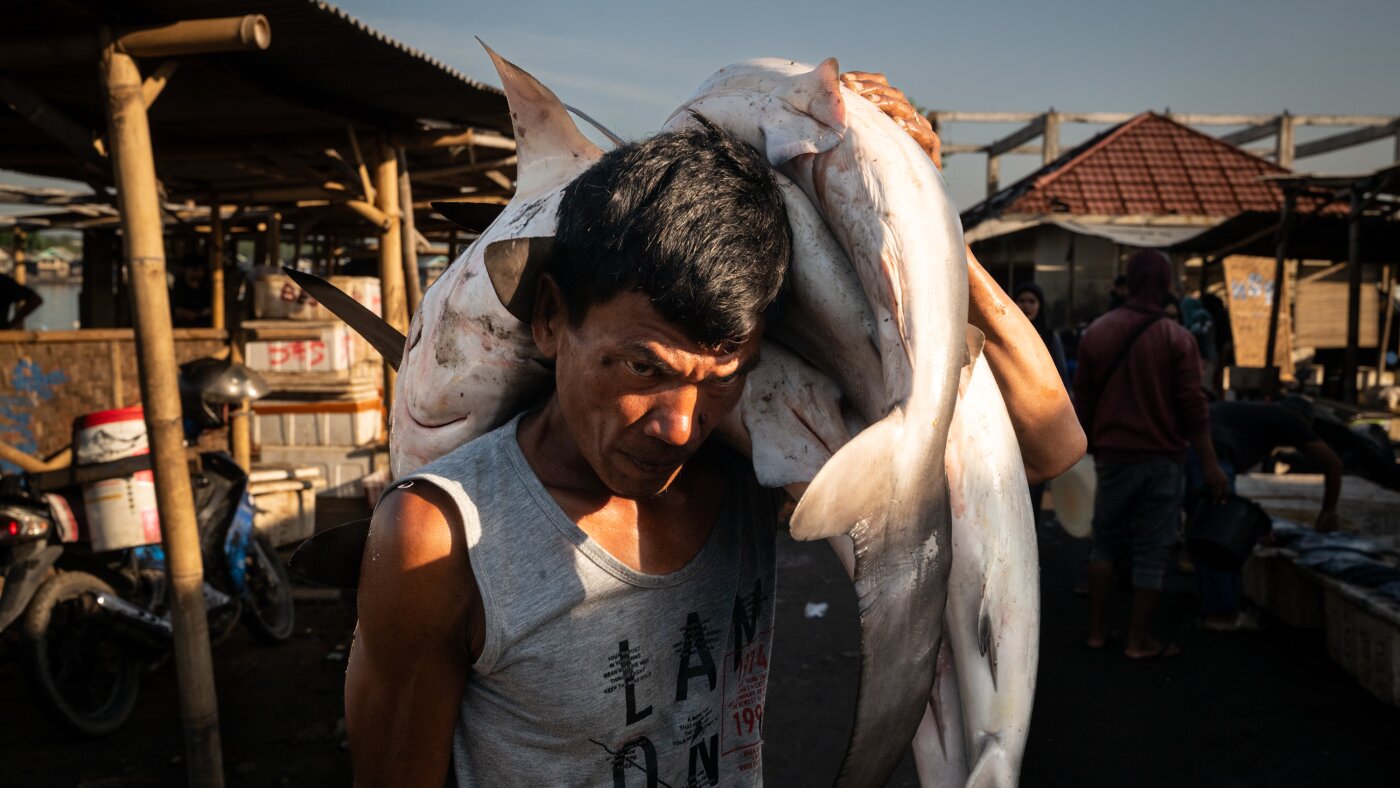
I recently stumbled upon some truly haunting images of the fishing industry in Southeast Asia, and to be honest, I am still trying to process what I saw. It is easy to think of the ocean as this infinite, bottomless pantry, but the reality on the ground—or rather, on the water—is much darker. We are talking about a region that produces more than half of the world’s fish, yet these very waters are currently suffering from some of the most severe depletion and geopolitical contestation on the planet. It is not just an ecological catastrophe; it is a profound human crisis that feels like it’s happening on another planet, even though it is very much our own.
The situation is best summarized by a chilling account from Akbar Fitrian, a 29-year-old Indonesian crewmember. He described an environment so desperate that tensions boil over into violence. “We were fighting over who had caught more fish, and then I saw my crewmate pushed overboard by the captain,” Akbar recounts. This single sentence shattered my perception of the idyllic life at sea. It paints a picture of a desperate industry where the competition for dwindling resources has pushed human empathy to the breaking point.
When I first started looking into this, I was completely naive. I thought fishing was just guys in boats casting nets and having a peaceful day. I actually remember a funny story from my own life—years ago, on a whim, I decided to join a local fisherman on a small skiff during a vacation in a coastal town. I had no gear, no experience, and a level of confidence that was frankly embarrassing. I spent four hours trying to catch “dinner,” ending up with nothing but a severe sunburn and a hooked piece of plastic driftwood. I thought it was hilarious. The fisherman, an old salt with skin like leather, just looked at me, sighed, and handed me his own sandwich. Looking back, that quiet, patient man was lucky he lived in a place where the fish were still abundant enough for a tourist to fail miserably. The crew members in Southeast Asia don’t have that luxury; their survival depends on every single haul, and the ocean is slowly running out of options.
That personal experience was a clumsy, lighthearted memory, but it stands in stark contrast to the grit and danger that define the industrial-scale overfishing happening now. It is not just about the loss of biodiversity; it is about the socio-economic stability of millions of people who rely on these waters for their literal survival. The decline in stock is pushing ships further into disputed territories, creating a geopolitical powder keg. If we don’t pay attention, we aren’t just looking at empty nets; we are looking at a total collapse of a vital food security system.
There is another funny, albeit slightly mortifying, memory that keeps popping up. On that same trip, I accidentally snagged a pelican’s wing (don’t worry, the bird was fine and actually quite aggressive about demanding the bait). The local boat captain had to stop everything to untangle the mess. He was laughing so hard he nearly fell off the bench. We spent an hour talking about how “the ocean has a funny way of teaching you respect.” I realized then that I had no business being on the water without understanding the rhythm of the sea. Today, as I read reports on how illegal, unreported, and unregulated (IUU) fishing is stripping the seabed bare, I don’t find it funny anymore. The ocean has stopped “teaching” and started crying out for help. The stakes are much higher than a tangled fishing line or a disgruntled bird.
To put things into perspective, here is a breakdown of why this is such a critical issue:
The Core Problems:
Ecological Collapse: The speed at which species are being removed exceeds the natural replenishment rate of the marine environment.
Human Rights Abuses: The competition for profit often leads to labor exploitation, forced labor, and violence on the high seas.
Food Security: Millions depend on these fish for protein; as stocks vanish, local populations are the first to suffer from rising costs and malnutrition.
We need to stop viewing these photos as just “news” and start seeing them as a mirror. If we continue to ignore the plight of those like Akbar, the environmental degradation will eventually become irreversible. It’s time we acknowledge that the ocean is not an infinite resource, and the lives of those who work upon it deserve far more than the violence born of scarcity.