
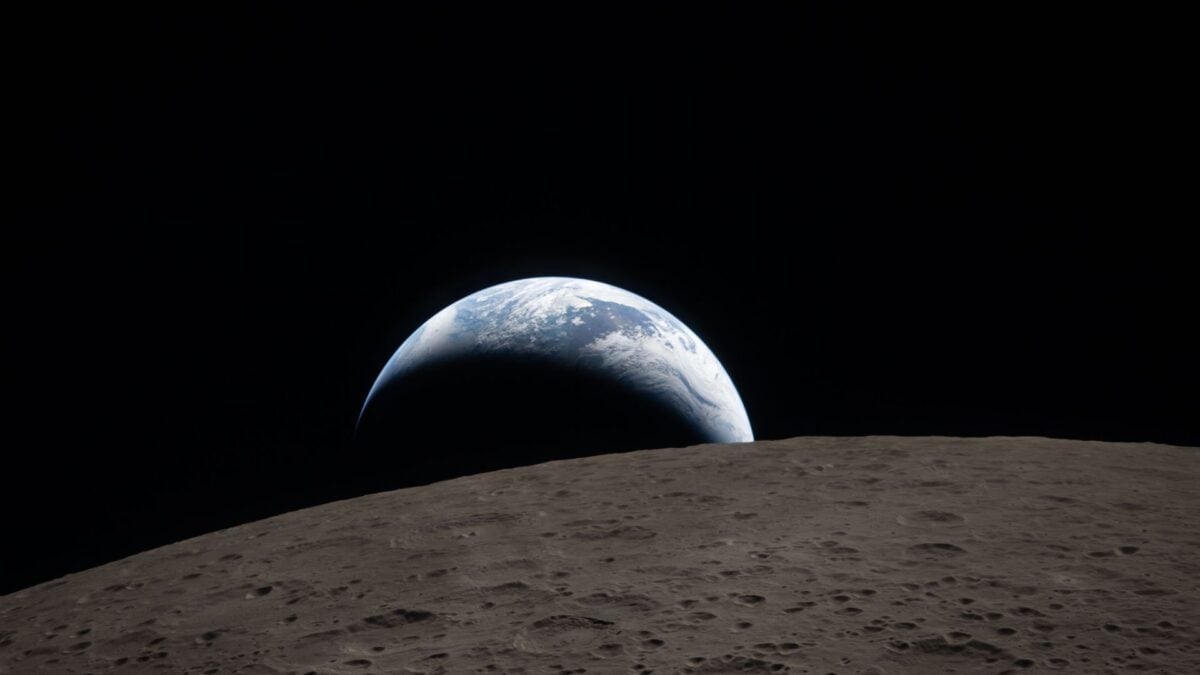
The internet is currently witnessing a moment of profound cosmic realization. A jaw-dropping video, captured during the Artemis II mission, showcases the Earth setting behind the rugged, desolate horizon of the Moon. Shared by mission commander Reid Wiseman, the footage offers a perspective that has been reserved for only a handful of humans in history. While the technical achievement of navigating a 10-day loop around our lunar neighbor is a masterclass in modern aerospace engineering, the viral nature of this clip stems from something deeper: the humbling realization of our planet’s fragility.
For decades, we have relied on robotic probes and high-budget cinematic simulations to visualize deep space. However, seeing the blue marble of Earth dipping behind the cratered gray landscape of the Moon through the lens of a handheld device brings the reality of space exploration into our daily digital feed. It is a stark reminder that while we often lose ourselves in the noise of terrestrial life, we are essentially passengers on a tiny, isolated vessel floating in a vast, indifferent vacuum.
The Engineering Marvel Behind the Mission
The Artemis II mission serves as a critical precursor to establishing a permanent human presence on the Moon. Unlike the Apollo missions of the 1960s and 70s, which were focused on rapid lunar landings, the Artemis program utilizes the Orion spacecraft—a vehicle designed for long-duration deep space flight. The journey involves complex gravitational maneuvers that require precise timing and fuel management.
To understand the magnitude of this feat, consider the following technical milestones achieved by the crew:
| Achievement | Significance |
| Free-Return Trajectory | Allows the spacecraft to loop around the Moon using gravity to return to Earth without using excessive fuel. |
| Deep Space Communication | Testing high-bandwidth data transmission over 240,000 miles to ensure mission safety. |
| Radiation Shielding | Demonstrating that the Orion heat shield can protect human life during high-speed atmospheric reentry. |
Connecting the Human Element to the Void
Commander Reid Wiseman and his crew are not just pilots; they are the frontline explorers for the next generation. The “hard part” mentioned in the viral discourse refers to the psychological toll of deep space. Isolation, the delay in communication, and the constant threat of technical failure create a pressure cooker environment that only a few have experienced. Yet, the viral response to this video suggests that people on Earth find a strange comfort in these images. When we see the Earth disappear behind the Moon, we feel a collective sense of unity that transcends geopolitical borders.
“When you look back at Earth from that distance, you don’t see the borders of nations. You see a fragile, glowing orb that is home to everything you have ever known. It shifts your perspective on what truly matters.”
Tips for Aspiring Space Enthusiasts
If you find yourself captivated by these lunar vistas, you might want to delve deeper into the science and history of the Artemis program. Here are a few ways to keep up with the cutting edge of astronomy and spaceflight:
- Follow NASA’s Official Channels: NASA’s social media and website remain the primary source for raw, high-resolution footage from the Artemis missions.
- Utilize Tracking Apps: Use satellite tracking tools to identify the International Space Station or the Moon’s current position relative to your location.
- Learn the Physics: Explore the concept of “orbital mechanics.” Understanding how gravity acts as a slingshot will make the next mission update even more impressive.
- Support STEM Education: Many of the breakthroughs seen in the Artemis mission are the result of collaborative efforts from researchers across the globe. Staying informed on space policy is a great way to advocate for continued funding.
The Artemis II footage is more than just a viral clip; it is a testament to human ingenuity. As we look toward the future of lunar colonization and potential trips to Mars, videos like this act as the heartbeat of our exploration efforts. We are no longer a species bound to a single planet, but a civilization in the process of extending its reach into the stars. The next decade promises to be the most exciting chapter in human exploration, provided we keep looking up and questioning what lies beyond the horizon.